RSS

Introduction:


At Mitten Real Estate Team we are pleased to bring you our latest Blog Article about interest rates and their effect on the real estate market.  It is our hope that as a current or potential real estate owner/investor this article will help you be able to understand how interest rates affect the real estate market.


Interest Rates:


Interest rates are essentially the ‘time value’ of money.  The interest rate is how much a borrower pays a lender for the use of their money.  Additionally, interest rates are also meant to compensate the lender for the risk of loaning the money to the debtor since there is not a 100% guarantee it will be repaid.


Central Bank Interest Rate: (Also Known as the overnight interest rate or key interest rate)


The central bank interest rate in the interest rate at which the central bank of a country lends to domestic banks.  These loans are very short in duration and are used because the amount of money a bank has fluctuates daily based on its lending activities and its customers’ withdrawal and deposit activity, the bank may experience a shortage or surplus of cash at the end of the business day. Those banks that experience a surplus often lend money overnight to banks that experience a shortage so the banking system remains stable and liquid. (Source: Investopedia)


The Central bank interest rate (overnight interest rate) is a very important interest rate because it affects the rates at which banks lend money to customers as well as other banks, which has a large influence on the economy and employment.  The Bank of Canada makes announcements on interest rates eight times a year, the exact dates are decided on each year and the dates are published.


Prime Rate 



The ‘prime interest rate’ is the interest rate at which commercial banks lend to their most credit worthy clients.  Although the prime rate is closely related to the central bank rate set by the central bank it is not the same as the central bank rate, and is somewhat higher than the central bank rate, depending on the bank.


Inflation and interest rates:



Inflation is referring to a loss of purchasing power over time resulting from the rising price of goods and services.  For example if a package of gum was $1.00 today and the inflation rate was 2%.  In one year the pack of gum would cost $1.02.  Inflation is measured using the consumer price index (CPI), which is essentially a bundle of goods and the market price of each is monitored to determine inflation.  Most central banks aim for an inflation rate of 1-3% which is viewed as being healthy for the economy.  As a general rule as the economy strengthens inflation tends to rise, if inflation gets out of control then purchasing power can be eroded too quickly, so the central bank will raise interest rate to slow inflation, which also slows the economy.  Alternatively if the economy is weakening and inflation is stagnating the central bank will lower interest rates in help strengthen the economy.

There are several economic theories that explain these concepts in detail but they are beyond the scope of this article.


Interest Rates and Affordability:


When interest rates are low people are more likely to borrow money so that they can make investments in productivity (such as equipment, hire new employees and invest in their businesses etc…), because borrowing the money is relatively inexpensive.  This borrowing and investment in productivity in turn stimulates the economy to grow and often eventually causes an increase in inflation as a result.

When inflation rises the central bank raises interest rates.  When this happens the interest rate for borrowers increases and it becomes more expensive (less affordable) to borrow money to invest in productivity, thus less people borrow money and most business/people will cut back on spending thus slowing the economy and inflation.


Interest Rates and Investments:


As a general rule when interest rates are low, debt investments such as bonds tend to have a lower yield making them less attractive to investors, during low interest rate environments’ equity investments such as stocks in companies tend to be more attractive to investors because the companies are able to make use of the inexpensive debt to grow and offer a higher yield to investors.  This coupled with the low yields of debt investments tends to make stocks more attractive to investors when interest rates are low.


Interest Rates the Real Estate Market:
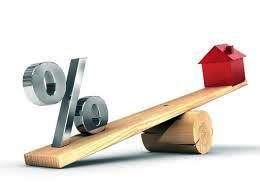

When interest rates are low financing of real estate becomes more affordable then when rates are higher, thus allowing more people to ‘afford’ real estate and this in turn can put an upward pressure on prices of real estate.  However, interest rates are usually lower when the economy is weak which can mean less people are in a position due to unemployment etc…

To see the effect interest rates can have on affordability let’s look at one example:


If a person took out a $300,000 mortgage on home at a 3% interest rate with a 25 year amortization their monthly payments would be $1,419.74


If the same person took out a $300,000 Mortgage on a home at a 4% interest rate with a 25 Year amortization their monthly payments would be $1,578.06


As you can see from this example if interest rates are 1% higher the same $300,000 mortgage would cost the borrower an extra $158.32 a month in interest.


However as was mentioned earlier even though housing becomes more expensive to finance when interest rates are higher, usually the economy is stronger as well which means people can afford to spend more since they may be making more money.  Nonetheless higher interest rates can put somewhat of a downward pressure on home prices.

An additional market phenomenon is that often after a potential raise in interest rates is announced there is a short period where the real estate market actually increases in activity.  The main reason for this is that potential purchasers who have already been pre-approved at low interest rates will ‘rush’ to buy before their pre-approval at the lower rate expires.


Conclusion:


To conclude at Mitten Real Estate team we hope that this article has helped you better understand interest rates and how they affect the real estate market.  As always if you have any questions about this article or any other real estate related questions please contact we are always happy to help you and we always have time to help you plan for the future.  We can be reached through this website, by e-mail at dbmitten@mitten-realty-services.com or at 604-882-8384.


Sincerely,


Doug, Bonnie and David Mitten (Mitten Real Estate Team)


Read

If you have ever thought about investing in a rental property but are unsure if it made financial sense this article is for you!


Buying a rental property is very different from buying your personal home, in that a rental property in a financial investment and it must generate a reasonable return on your investment in order to be worthwhile.  So how do you know if buying a rental property is worthwhile? Keep reading to find out…


As a real estate investor you must analysis properties from a finance perspective…  A very important finance calculation is the C.A.P rate.


Capitalization Rate


The Capitalization Rate (Cap rate) is a mathematical expression how much monetary return you will receive on your investment.  In other words the percentage return an investor would receive on an all cash purchase.


The Formula is:


Essentially to determine the capitalization rate you take the net annual operating income(NOI) and divide it by the purchase price of the property.  However before we can determine the cap rate of a property you must determine the annual net operating income.


Annual Net Operating Income


The calculation for determining the annual net operating income:


So to calculate NOI you would take the gross operating income (annual projected rent) and subtract all the operating expenses.  Operating expenses would include thing such as:


-Insurance

-Property Taxes

-repairs and maintance

-Property Management (if applicable)


However, it is important to note a few expenses are not part of the NOI, these include income tax on profit and mortgage interest.


CAP Rate Example


To demonstrate how to use cap rate here is a fictional example…


$510,000 Basement Home in Walnut Grove, 2400sqft with double garage, This home has a projected monthly income of $2,500/mo.


2,500 x 12 = $30,000 (Annual Gross Rental Revenue)


Operating Expenses are:


$2,500 /yr insurance +


$3,600/ yr Repairs, +


$3,600 / yr Property Taxes


Total Operating Expenses = $9,700


Using the above formula we can calculate NOI to be $20,300


From this we can use the formula determine the cap rate…


20,300/510,000 = 3.98% So the capitalization rate of this particular (fictional) home would be 3.98%


From this we can also determine the payback period as follows…


510,000 / 20,300 = 25.1 Years or 301.5 months.


The Payback period refers to how long it will take to recover your investment through collecting  net income genrated by the property..


Now, of course our example assumes that an investor plans to hold the rental property indefinably, but in reality many investors do sell properties at some point in which case they may also realize a profit when they sell their property especially if they have held it for many years.  Any gains in property value made at the time of selling would usually be subject to capital gains taxation, just as most other investments would be...


Uses of Cap Rate:


  • Cap rate can be used to determine the fair value of a rental property compared to other properties in a similar area.


  • Cap Rate can be used to decide between investments types eg.( Real Estate v.s bonds)


  • Cap Rate can also indicate risk, for example properties in one area of a city may have a higher cap rate because there is less demand for rentals in the area so they carry a higher risk of vacany. Some other examples of risk that can affect cap rate are, age of a property, credit worthiness of current tenants (if applicable), length of lease in Place (if applicable), etc…


  • Cap rate can also be s sign of how much demand there is in the market for a certain type of property, meaning if a trend of cap rate decreasing for a certain type of property is observed, the market for this type of property is heating up and prices are being bid up thus reducing the cap rate.


What About Vacancy?


Vacancy is an important consideration for potential investors. And on the long term vacancy does effect cap rate.  However the expected vacancy rate can vary significantly based on the area type of property etc…


Example: If in the area a 2 week per year vacancy was expected you would deduct half a months rent from the Gross Rental Revenue.


For the example we discussed above this would reduce the Gross Rental Revenue to $28,750 (from $30,000) and the NOI to $19,050 (from $20,300) resulting in a C.A.P rate of 3.74% and a 26,8 Year (or 321.3 months) Payback period.


Thus projected vacancy is an important factor to consider when calculating cap rate, but the projected vacancy rate will vary based on area and the type of property.


What about Mortgage/Financing Costs?


Mortgage payments are generally not included in the calculation of C.A.P rate.  The reason for this is that financing costs from leveraging can very significantly based on credit history as well as down-payment etc.. which would result in a skewed CAP rate if they were included. 


However interest expenses on mortgages of investment properties are usually tax deductible so using a mortgage (leveraging) when investing in real estate can have tax benefits, talking with an accountant would be advisable if you are considering using leveraging (a mortgage) when purchasing a rental property as a way to reduce tax on the revenue.

Although it is not included in CAP rate calculations, financing is a very important aspect in determining if a rental property will make sense financially.  Speaking with a good mortgage broker about you ability to finance the purchase and the interest rate avaible is advisable. If you are thinking of buying a rental property using a mortgage and you are not currently working with a Broker please contact us and we can direct you to good mortgage broker who can disscuss what financing options are avalible to you.


Conclusion:


As a current or potential real estate investor, Capitalization rate and other financial considerations are key to making sure that you receive a good return on your investments, which is why we have written this article as a service to our current and future clients, that will help them better understand the finance apect of investing in real estate rental properties.

  This article should be considered as a good introduction to some of the useful finance concepts that can be used when deciding to invest in rental properties.


This article is however, not intended to be a comprehensive guide to the finance side of real estate investing.


 If you are thinking of investing in rental properties in B.C’s lower-mainland as part of your investment portfolio please contact us we would be happy to discuss some of the finance concepts you should consider when investing as well as assist you with finding a property that would suite your investment goals. We can be reached through this website or by phone at 604-882-8384.


Sincerely,


Doug, Bonnie and David Mitten (Mitten Real Estate Team)


Read

Selling your home is a big financial decision.  So when it comes time to sell it is important to get the best value possible for your home.  Over the years working in real estate have have learned what many buyer look for in thier next home and so here are some tips for how to prepare your home for sale.  Interestingly, one thing that sometimes gets overlooked when selling a home is the presentation and staging.  These are important details because often times how clean and presentable a home is plays crucial role in determining a buyers impression of your home.

While putting a new fancy bathroom in your home or a new upscale kitchen will certainly impress buyers, surprisingly the details such as paint touch-ups can be very important as well.  And often small details like this give a much larger return on investment then do larger more expensive home renovations and improvements.


Tip # 1  Keep your Lawn and garden trimmed and tidy


The first such detail is; make sure the yard is neat and clean and the grass is mowed.  Nothing gives a worse impression to a buyer than pulling up to a home with an over grown lawn.  Alternatively, a neat well cared for front yard sends a good first impression as a buyer drives up to your home.


Tip # 2 Keep your exterior Trim look fresh with a new coat of paint


Secondly, make sure siding is clean on your home and the trim is nicely painted.  Although this can be accomplished in only a weekend with nothing more than a pressure washer and a can of paint the impact on buyers of a nice clean home with fresh paint on the trim can’t be underestimated.  Alternatively, your home might be beautiful inside but if the siding has green algae on it and the paint is peeling off the trim many buyers may discount your home before they even get through the front door.  Additionally, be sure that your front door and hardware are in good working order.


Tip # 3 Nothing makes a home look newer than a fresh coat of paint.


The third tip is, if your home has noticeable chips or marks on the interior paint it is well worth your time to do touch-ups, since spending an afternoon doing touch-ups can make the difference between whether a buyer thinks your home has nice paint or is in need of new paint and equally important chipped paint on ones walls can make a buyer feel that the home has been neglected and not well cared for.


Tip # 4: Uncluttered presentation is a critical component of maximizing the perception of spaciousness when presenting a home.


The fourth tip may be a bit obvious but if possible make sure your home is vacuumed, de-cluttered and cleaned before showings, even if you have a beautiful home if buyers walk into a your home and see dishes piled up in the kitchen and clothes on the ground etc… they will believe your home has not been well cared for and they will not value it as highly.  Clear countertops to maximize the impression of cabinet and countertop space, organized closets, keep bathroom toilet tops and countertops clear of clutter, uncluttered hallways and rooms all serve to maximize the presentation in a way that ensures the home is presented to its best advantage.


TIP # 5 Keep the kitchen clean and de-cluttered.


The fifth tip is that the kitchen is one of the areas of the home buyers consider to be most important. Consequently It is important to show your kitchen to its best advantage. Be sure countertops are virtually clear to maximize the impression of lots of countertop space in the mind of the Buyer. Toasters, blenders, coffee perks and can openers should be stored in a convenient out of site location – not on the countertop when you are selling your home. While recognizing this as somewhat of an inconvenience it will truly show this important room to its best advantage. to de-clutter your fridge door.  While many people enjoy putting pictures and calendars on their fridge doors, it is a turn-off for most buyers. When it’s time to sell it’s best to store the fridge door photo’s in a drawer.


Tip #6 Keep your baseboard and trim clean


The Sixth Tip is to dust your baseboards, if you have dirt and dust on the baseboards your home may be perceived as ‘dingy’ by buyers.  Bring-out the duster when it’s time to sell, it will be well worth your time.


Tip # 7 Arrange furniture in such a way that it promotes smooth traffic flow


The Seventh tip is that over time many people collect more and more furniture and personal belongings.  Unfortunately, too much furniture (or to large of furniture) makes your home look smaller and more cluttered in the eyes of many buyers. Thus, it is best to arrange your furniture in such a way that it promotes smooth traffic flow and be sure to keep paths, halls and walkways clear. It is not unusual to have a number of people viewing the home when it is being shown.


Tip # 8 Keep your home odor free


The eighth tip is, if you are a person that likes to burn scented candles leave them unlit for showings.  The reason for this is that buyers with asthma and other respiratory conditions may not be able to look at you home at all, as it may cause them difficulty breathing.  Additionally, many buyers may also think you are trying to cover an odor and will be suspicious of your home.


Tip # 9 Use neutral colors


The Ninth tip, is that if you are planning to repaint your home before selling, pick neutral colors that most people will like.  Although it can be tempting to put your favorite color on the walls, doing so can cause buyers to have a ‘love it’ or ‘hate it response’ and reduce the number of buyers that will consider your home, where neutral colors will be attractive to a far larger group of buyers.


Tip #10 Maximize your Home's lighting


The Tenth tip, is if you choose to put CFL or LED light bulbs in your home, try to choose lights that produce light that is a similar color to what older incandescent lights produce as this is what most buyers consider normal.  Having a super white or bluish light can give people an odd feeling about your home and can also make the colors in your home appear different, so best to avoid unusually colored bulbs if you are thinking of selling.  It is also often wise to use brighter bulbs in your lights when you are selling than what you may normally use – after all you want your home to be bright and cheerful not dark and dingy. Additionally, be sure that all light switches have covers on them and are in good working order so that buyers are confident your home has no electrical problems.


Tip # 11 Be sure your bathroom is clean


The eleventh tip is be sure bathrooms are sparkling clean. Once again clear countertops and organized drawers are the order of the day. Be sure that you fix any leaky faucets, loose cabinet hardware, drawer handles, chipped countertops or sinks and replace outdated or inefficient light fixtures. Be sure grout in shower and around the tub is sparkling clean and repair any cracked grout. Remove clothes hampers, be sure toilet seats are down and toilets are flushed and once again be sure that your bathroom is odor free for showings.


Tip #12 Clean and refurbish your carpets


The twelfth tip is to clean your carpets and re-stretch those areas which require it. Carpeting has a major impact on the look of a home. Be sure your home is vacuumed prior to showings. If there are areas that are badly worn, outdated or stained, consider having it replaced. Scrub and wax tile floors and repair or replace cracked tiles.


Tip #13 Keep your roof in good condition

The thirteenth tip is that, buyers pay close attention to the condition of your roof. Re-patch or re-shingle where necessary, and fix leaky, corroded or plugged downspouts and gutters. Inside, a watermarked ceiling is a sign to buyers that the roof has leaked—even if damage has been repaired.


Tip # 14 Clean and de-clutter your Garage and Driveway


Be sure your driveway and garage are clean and presented to maximize their size. Organize garagesand park extra vehicles away from the property.


Conclusion:


In conclusion, although taking care of the details in your home does not cost a lot it can certainly change the way buyers view your home and help your home sell for a higher price.


As always if you have any questions about selling your home please feel free to contact us, we can be reached through this website or we would be happy to speak with you, just call 604-882-8384.


Sincerely,

-Mitten Real Estate Team

Read
Reciprocity Logo The data relating to real estate on this website comes in part from the MLS® Reciprocity program of either the Greater Vancouver REALTORS® (GVR), the Fraser Valley Real Estate Board (FVREB) or the Chilliwack and District Real Estate Board (CADREB). Real estate listings held by participating real estate firms are marked with the MLS® logo and detailed information about the listing includes the name of the listing agent. This representation is based in whole or part on data generated by either the GVR, the FVREB or the CADREB which assumes no responsibility for its accuracy. The materials contained on this page may not be reproduced without the express written consent of either the GVR, the FVREB or the CADREB.