This week at Mitten Real Estate Team we would like to bring you the latest report on the Fraser Valley Housing market, produced by the Fraser Valley Real Estate Board.
SURREY, BC – The Fraser Valley Real Estate Board processed 1,419 sales on its Multiple Listing Service (MLS®) in
September, an increase of 25 per cent compared to the 1,131 sales during the same month last year, and an
increase of 9 per cent compared to sales in August.
The Board’s president, says, “Similar to this past summer, this is the busiest September we’ve had
since 2009 with sales of all property types combined out‐performing the 10‐year average by 13 per cent.
“Residentially, the single family detached home remains the preferred property type. From North Delta to Mission,
sales increased in every Fraser Valley community compared to last year with the price range of $400,000 to
$699,999 garnering almost sixty per cent of our total detached market.”
New listing activity was also brisk in September with the Board’s MLS® receiving 2,758 new listings, an increase of
16 per cent compared to last year, taking the total number of active listings by month‐end to 9,156, a decrease of
7 per cent compared to September 2013.
Werger adds, “An important factor underlying the housing market is consumer confidence and in our region that
confidence has been bolstered by the stability of home prices. Since March, the benchmark price of our three main
residential property types combined has remained flat, increasing by only 0.6 per cent.
“Long‐term, the value of single family detached homes has increased at a faster pace than it has for attached
properties, particularly in areas such as Surrey, White Rock, Langley and Abbotsford where we’ve seen many new
townhome and condo developments. The supply of new inventory has affected the price of resale product.”
The MLS® Home Price Index (MLS® HPI) benchmark price of a detached home in September was $569,800; an
increase of 3.1 per cent compared to September 2013, when it was $552,900. In the last six months, the
benchmark price of a detached home has increased by 1.1 per cent.
In September, the MLS® HPI benchmark price of Fraser Valley townhouses was $299,600; an increase of 1.1 per
cent compared to $296,200 in September of last year, and in the last six months has increased by 0.8 per cent. The
benchmark price of apartments decreased year‐over‐year by 4.7 per cent, going from $203,100 in September 2013
to $193,600 last month, and has decreased by 0.9 per cent in the last six months.
As Always if you have any questions about this article or any other real estate realted questions please feel free to contact us we would be happy to assist you. We can be contacted through this site or you can call us directly at 604-882-8384. Please check back next week to see our latest analysis of another local real estate market in the Fraser Valley.
Sincerely,
Doug Bonnie and David Mitten.
(Mitten Real Estate Team.)
Introduction:
As time marches on our lives change and so to do our housing needs. Usually when we are younger we strive for a larger home/ property with more space and possibilities. Eventually as you get older that wonderful large home that you enjoyed for many years may become too large to suit your needs and the maintance and upkeep of you home may begin to seem like to large a task.
Additionally, after retirement you may choose to travel and not want to have to worry about who will take care of your home when you are away. Another consideration is that although we all hope you be in good health even in our latter years the reality is even if we stay in decent health eventually things such as stairs and uneven surfaces can become a problem for older home owners. That’s why for our Blog article this week we would like to talk about housing options for seniors.
Over the years we have helped many seniors through the process of planning out their retirement housing needs so we are writing this short article as a service to our clients and potential clients who are considering what sort of housing they need in their golden years.
Deciding on the housing option that will suit you best in your golden years is often a process. This process may take several months or even years. In the end what is important is that you are able to choose the option that best suits your health, life style and financial needs.
What is your current Home worth?

There are a number of factors that go into the process of choosing your retirement housing options. The first such consideration is financial planning. To start you should determine is what your current home worth. This is an important first step because for many people a good portion of their retirement wealth is tied to the value of their home and as a result the value of their home determines the housing options available to them. If you are would like to determine the value of your current home we would be happy to assist you even if you are just planning for the future and are not ready to sell yet.
Determining Your Lifestyle requirements:
The next part of the process planning your retirement housing needs is to look at your lifestyle requirements and their associated costs. For example:
1.) What type of care will you need and what is the cost of that care?
2.) What will your retirement income be or need to be?
3.) Estate Planning: do you want to leave money/assets to your heirs?
4.) Where do you want to live? Is there an area that is close to family you would prefer to live in?
After answering all of these questions you will be in a position to examine your housing options. So what are your options?
Option 1: Adult oriented complex/ community
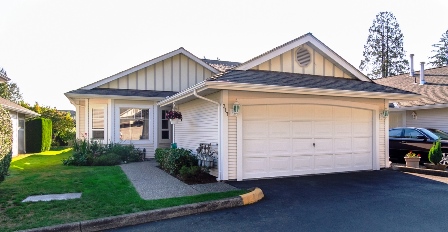
A typical 1 level townhome in an adult oriented community
An Adult Oriented Apartment Building
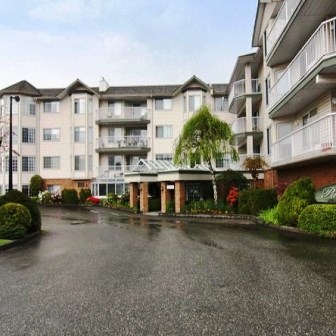
If your health is fairly good and you may want to consider an adult oriented apartment or townhouse complex.
There are a number of nice gated adult oriented communities in in Langley that offer senior friendly townhomes. Additionally there are also some nice adult oriented apartment buildings that are certainly an option for seniors.
An important thing to consider when you are looking at this option is whether or not you require care assistance (such as a nurse or care aid) on a daily or weekly basis. There are certainly government programs that can provide you with a very decent amount of care/assistance as well as some private companies that also offer care aids. Generally the cost of government provided in-home care is based on your income, meaning of you have a large income you will pay more than if you have a smaller income.
If you have mobility of other health challenges there are other options besides an adult oriented townhome or apartment. The next option is an independent living community:
Option 2: Independent Living Community
An example of an independent living community
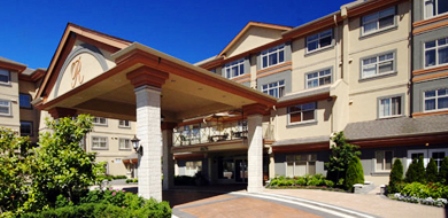
Independent living communities are available both with and without care assistance. Independent living facilities offer apartments, along with meals or meal plans, laundry, housekeeping, concierge services, handyman services and usually the option for care on a pay for use basis. Most are based on a rental for the apartment; however, some also offer the opportunity for ownership of the apartment.
If you think this option could be for you the next question is, should you rent or own an apartment in an independent living facility? Here are some things you should to consider:
Renting:
Some advantages of renting…
-With independent housing your housing is integrated with a number of other factors such as: food, staff, entertainment, care and more. The benefit to renting therefore, is that you will have the opportunity of determining whether the overall experience is to your satisfaction prior to your final decision. With this in mind I would highly recommend renting at least for a while before making your final decision.
-The benefit to renting on an ongoing basis is simply that although the housing is what it is, staff can change and along with the changes so can the care and the food. Renting allows you the flexibility to switch to other facilities should you decide you are no longer happy.
-Bear in mind that it has been the experience of many of our clients that have gone through this it takes at least six months to get used to a facility. Also bear in mind that no facility is perfect and often if you are not happy with something about the facility you are in that there are often benefits to working with staff to correct it rather than simply changing.
Some disadvantages of renting…
-The disadvantage to ongoing rent is that typically rents increase overtime and therefore your housing costs can go up as does your need for additional income.
-The other thing to consider with renting on an ongoing basis is that the income necessary to pay the rent may be taxable depending on your tax situation whereas with ownership providing you purchase without a mortgage you will need less income to sustain your living expenses and therefore your tax burden may be lower. When we were exploring this for our parents giving consideration to all of the factors they felt it was best for them to rent on an ongoing basis and we have found fianncial planners to be very helpful in working together with our accountants to structure a solution which mitigated the taxes payable on the income necessary to pay for their living expenses.
Ownership:
Some advantages of ownership are…
-Ownership allows you to fix your housing costs. The cost of food and care may still go up but the costs of the housing portion of your requirements is fixed and again if you own clear title the need for additional income and the tax burdens associated with it are a non-issue.
-The other benefit for ownership is that at the end of when you will be staying in this location you or your families owns the property and are able to sell the property at whatever the current market value is at that time. An accountant or financial planner can help you determine whether there are greater benefits in investing in the housing or other investments that may yield a greater return if this is the only decision in determining whether to buy or rent.
Some disadvantages of ownership are…
The disadvantage to ownership is the lack of flexibility. This disadvantage goes both to the choice of the facility you will be moving to originally as well as to the ease of moving should you not be happy with some facet of your living situation. Not all independent living communities offer the option to purchase and therefore if one desires the option to purchase it does limit the independent living communities that one can consider.
Whether you decide to rent or own in an independent living facility there are a number of such facilities in the Fraser valley to choose from.
If you feel you may require more care or assistance than either of these options can provide there is another option which is a full care facility.
Option 3: Full Care Facility
An expample of a full care facility
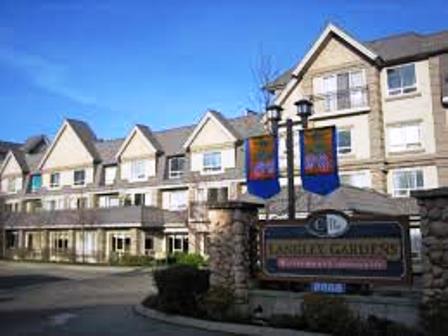
Full care facilities normally provide a room as well as the food and care on an all-inclusive basis. This decision is normally predicated on the care requirements of the individual. There are certainly a few options in the Fraser Valley to choose from in this category.
Downsizing Belongings:
Once you have determined the housing option that will best suit your needs, the next step is usually to downsize in to a smaller home that can serve your current needs. There are a number of things to consider when you are downsizing such as…
Can you downsize yourself?
Can you get help from:
1.) Family
2.) Church or support group
3.) Professional organizer
It is also important to realize that when you are downsizing you will not just be moving your furniture and possessions, you will have to decide which you can/ want to keep and what you must give away or throw out since your new home will likely not have space for all of your current belongings. If this is an area you think you will need to hire a professional we can put you in touch with professional organizers that specialize in helping others downsize.
Choosing Where to Relocate
Determining where to relocate often involves giving consideration to:
A. Near family or friends
B. Near support community
C. Near doctor or other professionals
What Are Your Goals?
The goal is usually to free up equity from your home to provide a simpler life, with your equity
providing both a place to live and income. Additionally, most people desire to move towards a more maintenance free life with options for future care if not immediate care.
Cooperation and professional advise is very important:
This transition often involves working together with family and professionals such as a lawyer, investment counselor/bank, doctors, accountant, realtor and care facilities and support workers to determine the income requirements, formulate a plan, and implement it. The important thing is that you determine what your needs and goals are and then ask each type of professional how you can best accomplish your desired results.
Conclusion:
We have helped many seniors to accomplish their retirement housing needs over the years and if you require any assistance in this process please let us know we would be happy to assist you with the real estate part of determining you retirement housing needs. We would also be happy to put you in touch with other professionals who can help with areas such as downsizing and organizing or estate planning etc… Whatever you retirement needs are we will to help you accomplish your goals. Even of you not ready to move yet we are happy to help you plan for the future. we can be reched through this website or you can phone us directly at 604-882-8384 we would be happy to assist you.
Sincerely,
Doug, Bonnie and David Mitten.
(Mitten Real Estate Team)
1,588 square foot updated 3 bedroom. 2 bathroom detached rancher in 'The Horizon' -an adult oriented 55+ gated community centrally located in Chilliwack.
This fine home boasts updated carpets and has recently been painted and is ready to move in and enjoy. Entertaining is easy in the spacious living room and dining room with cozy gas fireplace, vaulted ceiling and bay window. Spacious kitchen with lots of cabinets, and adjoining family room with a door to a large covered patio and attractive rear yard. 3 bedrooms and 2 bathrooms including spacious master bedroom with walk in closet and a 3 piece ensuite. Side by side Double garage and parking on driveway. Complex has RV parking and allows small pets - 18" at shoulder. 'The Good Life' gets even better when you make this terrific 1,588 square foot detached rancher in super 55+ gated community your own!
Introduction:
For this week's Blog article we (Mitten Real Estate Team) are pleased to bring you an update on the real estate market in Willoughby for the time period of August 2014 which we will be comparing to the same period last year. This report is being written as a service to our current and potential clients. We complied this report as part of our ongoing market reasearch of the local real estate market.

Apartments
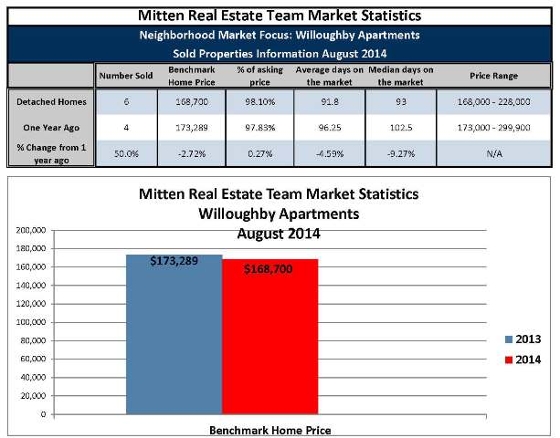
In August there were 6 sale sof apartments which was up from 4 sales that took place in August of 2013. The prices for apartments in Willoughby saw a small decrease by -2.72% from a benchmark price last year of $173,289 to $168,700 this August. The average and median days on the market did however see small decrease although the days required to sell remains quite high. The while the percentage of asking price recieved remianed virtually the same.

From this Data we can conclude that the market for apartments in willoughby was somewhat weak during August 2014 however the reduction in days is a good sign as is the increased number of sales which probbably correlates to the small reduction that was seen over the last year in apartment values, additionally there is a large supply new apartments for sale in both the yorkson creek development and the Atheny gate complex. Thus we would expect to see some additional softening in the prices of apartments in willoughby mainly due to the large supply of new apartments enetering the market in this area,
Townhomes
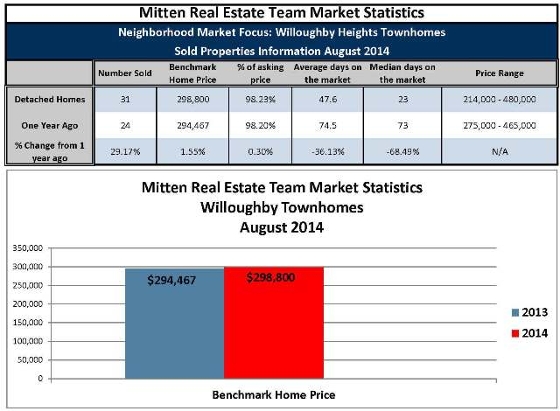
During this last August there were a 31 sales of townhomes in Willoughby compared to last year when there were 24 sales. Townhome prices in Willoughby saw a slight increase since last year of 1.55% also notable is the reduction of number of days on the market required to sell and the percentage of asking price recieved remained almost unchanged.

From this data we can conclude that the townhome market in willoughby, while still recovering is starting to see some limited signs of strength. This would point to potential (although limited) price increases in the future, however the market for this type of housing can easily be weakened if too many new townhomes come on the market at any one time.
Single Family Detached Homes
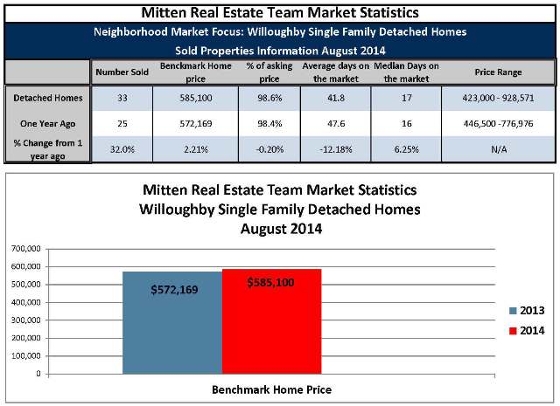
During August 2014 there were 33 sales of single family detached homes in the willoughby area as compared to only 25 sales in August 2013. Single family detached homes also saw a an increase in prices of a modest 2.21% during the last year and a slight reduction in the days required to sell although median days required to sell increased slightly. The percentage of asking price that homes sold for stayed almost unchanged.

From this Data we can conclude the The market for single family homes in willoughby is roughly balanced at this time although it is showing signs of increasing strength, however as with the other sectors in willoughby the strength of the market will somewhat depend on how many new construction homes enter the market in the coming months and years.
Acreages:
During August 2014 there were no sales of acreages in Willoughby, however there is still an acreage market segment in willoughby (although decreasing in size) as there were 22 sales in the last year. Unfortunatly, due to the lack of recent sales we could not analyze the general acreage market in willoughby. It is however fair to say that with a few exceptions the value of these acreages seems to lie in there future develppment potential as they are often bought by develpers and investors.
Active Listings:
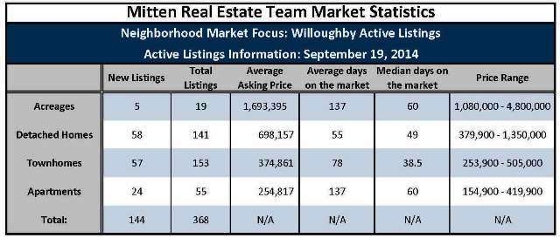
As of September 19 2014 there were a total of 368 properties listed for sale in willoughby. 19 of these were acreages with 5 of them being new listings (less than 30 days on the market). The average days on the market was 137 with the median days being 60 days and acreages ranged in price from $1,080,000 to $4,800,000 The single family detache homes consisted of 141 listings with 58 being new listings, additionally 49 of the 141 single family homes for sale are new construction homes. The average days on the market was 55 with the median days on the market being 49. There were 153 listings of townhomes with 57 of the listings being new listings and 67 of the townhomes for sale were new construction, the average days on the market was 78 with the median days being 38.5. The large decrepance between average and median days indicates that some townhomes are sitting on the market for long periods probbably due to being overpriced while more reasonably priced homes are sending less time on the market befor selling. There were 55 apartments for sale with 24 of the apartments being new listings and 39 of the 55 apartments were new construction. It is important to note that while the price range of apartments was between 154,900 to 505,0000 only new apartments were asking more than $259,900. Additionally all of the new construction apartments for sale were in either The Atheny Gate Complex or the Yorkson Creek Complex and many of the new apartments have been re-listed severa times without selling meaning that the days on the market is artifically low for apartments in willoughby due to develpers re-listing them over and over, which makes them apear to be new listings on MLS, when they in fact have been for sale for long periods of time.

Conclusion
As we have seen n other areas the strength of the real estate market in willoughby depends on which segment you are looking at. Single Family detached homes are showing modest strength with the market being fairly balanced between supply and demand at the moment. Townhomes have seen some strengthening since last year however the supply new construction townhomes entering the market continues to keep price increases low. The Market for Apartments in Willoughby would appear to be somewhat oversupplied at the moment with a large number of new construction apartments enetring the market, this has resulted in some price decreases, alhtough only samll decreases. Thus as we have seen in other areas the best preforming sector appears to be the single family detached homes.
As Always if you have any questions about this article or any other real estate realted questions please feel free to contact us we wpiuld be happy to assist you. We can be reched either through this website or by phone at 604-882-8384.
Sincerely,
Doug, Bonnie and David Mitten
(Mitten Real Estate Team)

Introduction:
As you may already know the housing market in the lower mainland and especially Vancouver is one of the more expensive in the world. From time to time you may have asked yourself why that is? That’s why this week at Mitten Real Estate Team we are going to look at some of the fundamental factors that contribute to the housing prices and popularity of the housing market in the lower mainland.
Constrained Geography:

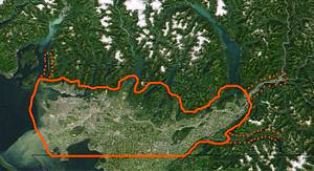
The First Reason that prices have risen in the lower mainland over time is that there is a limited amount of space for building. Geographically the region is contained with mountains to the north and east, the U.S boarder to the south, the Fraser river runs through the middle taking up space and the Pacific ocean is located to the west. Additionally, as a way to preserve farmland a large portion of the land in the Lower Mainland was designated as part of the Agricultural Land Reserve (ALR) many years ago. This of course further restricts the space available for development. Thus as our population grows and more people want to live here the value of the land will increase over time. Now this is not to say that an oversupply of certain types of housing in certain areas can’t happen short term, however long term the limited land area will support upward movement in prices long term especially as population increases.
International Trade

With the lower mainland being located on the pacific coast of Canada, having a river running through it and having the U.S Boarder to its south it is only natural for this area to be a hub of international trade. This trend has been accelerated in the past few decades as China and other countries in Asia gain importance in the world of international trade. Thus, since we essentially live in a gateway city for international trade, the value of land here is going to increase as a result of the economic activity generated by trade.
Safe Geopolitical Environment:
Another very important reason why demand for housing in the lower mainland is strong is that our area is in a politically stable and is far away from any instability. This is quite important because people naturally seek out safe areas of the world with relatively predictable laws. And it is this stability that at least in part allows people to feel comfortable in spending large sums of money on housing and investing in housing, since they know they are investing in a safe area.
Good Weather

In B.C a lot of us like to complain that it rains a lot, however compared too many areas of the world and Canada, the climate in the lower mainland is very temperate, predictable and nice. Yes it does rain a fair bit in the winter, however floods are relatively rare and large snow accumulation is also rare, making the mild winters easy to deal with. Additionally, the summers are usually quite nice and sunny but temperatures rarely clime very high and drought is fairly rare. Once more the spring and fall are quite mild with few severe storms. The reason for this is that the prevailing westerly winds passing over Pacific Ocean, then across the lower mainland are warmed by the water in the winter and cooled by it in the summer, resulting in a very nicely regulated climate that usually prevents extreme temperatures and extreme storms. Also since the ocean current that run by the lower mainland are coming from the north they do not allow this part of the ocean to heat up enough to develop hurricanes (except on very rare occasion). The trade-off for all of this is of course a bit of rain in the winter. This favorable climate helps drive the demand for housing in the region because not only is it nice weather for people to live in, but the weather does not generally interfere with the economy since extreme weather is historically rare compared to other regions, which encourages investment and economic activity in the region.
Beautiful Scenery:

If you live in B.C seeing the ocean or a beautiful mountain vista, is probably a regular thing for you. However, this is not so everywhere, and people are driven to these fantastic views. This of course means people want to visit here, leading to economic activity from tourism. Also lots of people want to live in a beautiful place which again fuels demand for housing in the region. Oh and don’t forget the draw of all those ski mountains nearby, meaning you can live anywhere in the region and still ski regularly in the winter without a large drive.
Multi-Culturalism:
In addition to all of these other factors the lower mainland is very multi-cultural and welcoming to new immigrants to Canada. As a result it is one of a few places in Canada that people newly arriving to the country are drawn to and of course that means they want to live here, which again drives demand for the housing market.
Foreign Investment:
For all of the reasons listed above, B.C’s lower mainland is a great place to live and has a lot of factors driving the housing market. This of course naturally catches the attention of foreign investors who want to invest in a relatively safe area that has many positive attributes. Many people complain about foreign investment ‘driving-up prices’, while it is true that foreign investment is a contributing factor to higher housing prices in the region, investors only invest here because of all of the other supporting factors and instead of being bitter about prices we could also be thankful as real estate owners/investors that there is a large pool of international investors willing to pay a fair amount for housing in the area which provides us with extra security against any large or fast price decreases and allows prices to be sustainable at higher levels than would otherwise be possible.
Conclusion:
While you may have sometimes heard talk of a ‘housing bubble’ in our area or prices are too high based on historical rent to price ratio’s, the consensus seems to be that the housing market in the lower mainland has so many positive factors driving demand that there is really no reason to fear any sort of housing crash in B.C. Now this is not to say that we never see any corrections in housing prices but demand for housing in the region will always be driven by these positive fundamental factors which will support housing prices long term. These positive factors are also the reason that the prices in the region are higher than other areas of Canada and yet are sustainable at those higher levels.
As always if you have any questions about this blog article or any other real estate related questions please feel free to contact us. We can be reached through this website or you can phone us directly at 604-882-8384 we would be happy to assist you.
Sincerely,
Doug, Bonnie and David Mitten
Mitten Real Estate Team.
Introduction:
At Mitten Real Estate Team we are pleased to bring you our latest blog article: an update on the Aldergrove real estate market perfomance in August 2014 v.s August 2013. This article was complied as part of our ongoing market research as a service to our clients and potential clients.
Community Information.
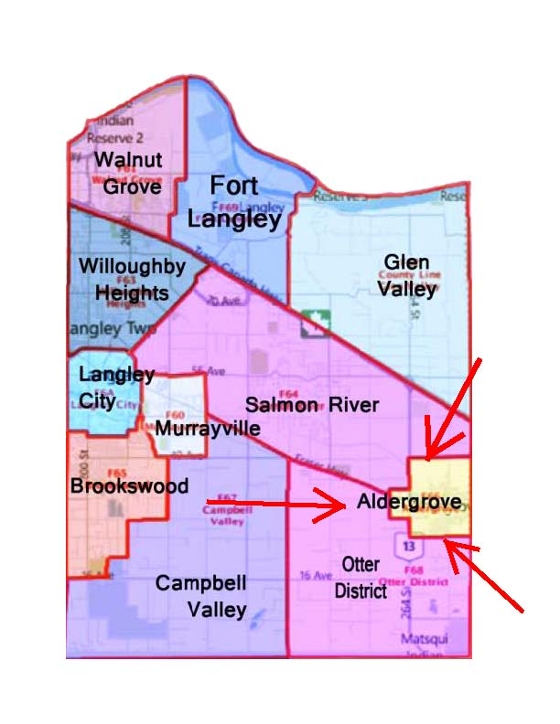
Aldergrove is located in the south east side of Langley (see the map below).

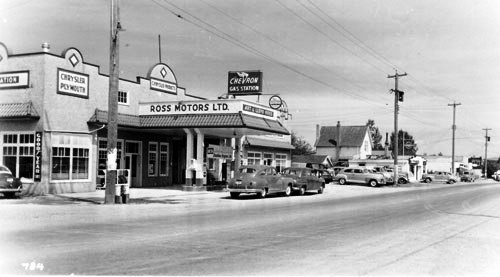
Aldergrove is one of the older communities in Langley. In the 1870’s Gold Miners and farmers began to settle in the area, it was named Aldergrove because of all the Alder trees in the area. In 1914 the Aldergrove post office opened, in the 1920’s the first store opened and in the 1930’s the community was connected to electricity.Aldergrove saw a fair bit of growth in the 1950-1970’s and continues to see growth to the present. Today Aldergrove has a population of 12,778 people.
Aldergrove 1958 cira

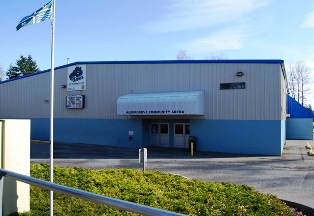
Aldergrove has a number of shops and amenities along and near Fraser Highway that runs through it. Some of the recreation facilities include various Althletic parks and an ice arena.
Aldergrove Ice Arena

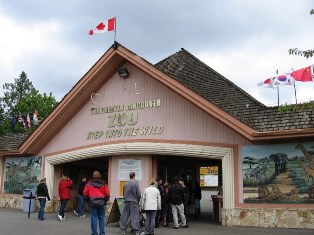
In Addition to the parks and the ice arena Aldergrove also has the Greater Vancouver Zoo nearby.
The Greater Vancouver Zoo.
Aldergrove has a number of housing options, single family detached homes make up the largest portion but there are also a number of apartments and townhomes in the area and even a few acreages.
Single family Detached Homes.
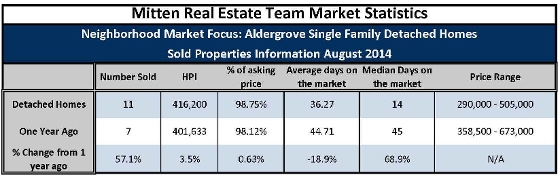
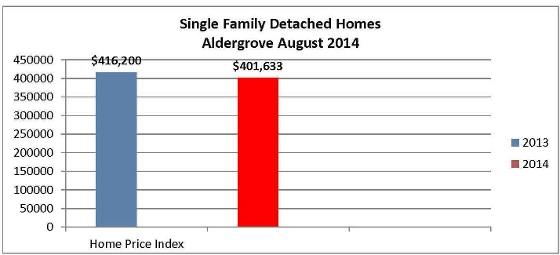
During August 2014 there were 11 sales of single family detached homes in Aldergrove compared to 7 sales in August 2013. Single family detached homes in Aldergrove saw a 3.5% increase in prices while the average days on the market required to sell dropped 18.9% to 36.27 days.


From this Data it would seem to suggest that the market for Single Detached Homes in Aldergrove is Strengthening with a modest increase in prices, increased sales activity and a reduction in the average time required to sell.
Townhomes
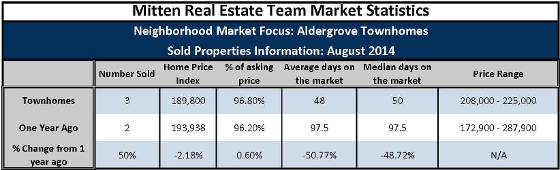
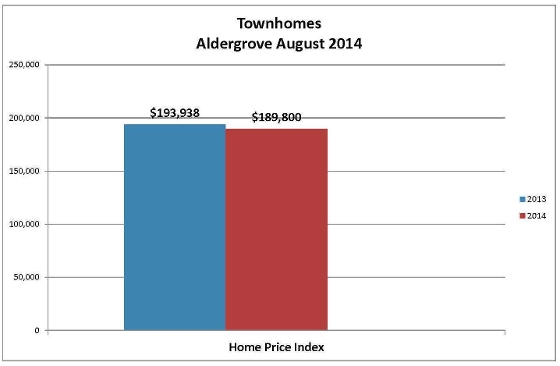
During August 2014 there were 3 sales of townhomes in Aldergrove, this was up from 2 sales that took place in August 2013. Townhomes saw a 2.18% decrease in price however the average time required to sell dropped from 97.5 days to only 48 days.


This data suggests that while prices of Aldergrove townhomes dropped slightly during the last year the market is moving toward equilibrium with a reduction of the days required to sell and an increase in sales activity.
Apartments
During August 2014 there were no sales of Apartments in Aldergrove, additionally there were no sales of Aldergrove apartments in August 2013 either. In total there have been only 10 sales of Apartments in Aldergrove in the last 13+ months. Although we have not enough data to say much about the market it would seem this segment of the Aldergrove market is in tough shape, with the likely cause of the very low sales volume being a sort of ‘stand-off’ between buyers and sellers over price.
Active Listings:
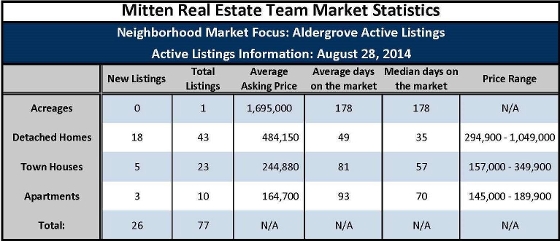
As of August 28, 2014 there were a total of 77 Active listings for sale in Aldergrove, with 26 being new listings. There was one acreage listed. There were 43 single family detached homes listed with 18 being new listings. The average asking price of single family detached homes was $484,150 and the price range was from $249,900 to 1,049,000 with the listings having spent an average of 49 days on the market. There were 23 Townhomes for sale in Aldergrove with 5 being new listings. The average asking price was $244,880, they ranged in price from $157,000 to $349,000 and have spent an average of 81 days on the market. There were 10 apartments for sale in Aldergrove with 3 being new listings. The average asking price was $164,700 and the price range was $145,000 to $189,900 with the average time spent on the market being 93 days.

Conclusion
As we have seen in other areas, the market is in Aldergrove varies quite a bit based on the market segment. The Market for Single family detached homes is strengthening with modest price gains, increased sales and a reduction in the time required to sell compared to a year ago. The market for Aldergrove townhomes has seen a small deduction in prices, however there has also been an increase in sales volume and a reduction in the time required to sell suggesting that this market segment is moving towards equilibrium if all other factors stay the same. The market for apartments in Aldergrove could not be analyzed due to a lack of sales. However, this suggests that buyers and sellers are not coming to terms on prices meaning the market may need to see some price reductions before sales volumes start to increase.
Introduction:
At Mitten Real Estate Team we are pleased to bring you our latest Blog Article about interest rates and their effect on the real estate market. It is our hope that as a current or potential real estate owner/investor this article will help you be able to understand how interest rates affect the real estate market.

Interest Rates:
Interest rates are essentially the ‘time value’ of money. The interest rate is how much a borrower pays a lender for the use of their money. Additionally, interest rates are also meant to compensate the lender for the risk of loaning the money to the debtor since there is not a 100% guarantee it will be repaid.
Central Bank Interest Rate: (Also Known as the overnight interest rate or key interest rate)
The central bank interest rate in the interest rate at which the central bank of a country lends to domestic banks. These loans are very short in duration and are used because the amount of money a bank has fluctuates daily based on its lending activities and its customers’ withdrawal and deposit activity, the bank may experience a shortage or surplus of cash at the end of the business day. Those banks that experience a surplus often lend money overnight to banks that experience a shortage so the banking system remains stable and liquid. (Source: Investopedia)
The Central bank interest rate (overnight interest rate) is a very important interest rate because it affects the rates at which banks lend money to customers as well as other banks, which has a large influence on the economy and employment. The Bank of Canada makes announcements on interest rates eight times a year, the exact dates are decided on each year and the dates are published.
Prime Rate

The ‘prime interest rate’ is the interest rate at which commercial banks lend to their most credit worthy clients. Although the prime rate is closely related to the central bank rate set by the central bank it is not the same as the central bank rate, and is somewhat higher than the central bank rate, depending on the bank.
Inflation and interest rates:

Inflation is referring to a loss of purchasing power over time resulting from the rising price of goods and services. For example if a package of gum was $1.00 today and the inflation rate was 2%. In one year the pack of gum would cost $1.02. Inflation is measured using the consumer price index (CPI), which is essentially a bundle of goods and the market price of each is monitored to determine inflation. Most central banks aim for an inflation rate of 1-3% which is viewed as being healthy for the economy. As a general rule as the economy strengthens inflation tends to rise, if inflation gets out of control then purchasing power can be eroded too quickly, so the central bank will raise interest rate to slow inflation, which also slows the economy. Alternatively if the economy is weakening and inflation is stagnating the central bank will lower interest rates in help strengthen the economy.
There are several economic theories that explain these concepts in detail but they are beyond the scope of this article.
Interest Rates and Affordability:
When interest rates are low people are more likely to borrow money so that they can make investments in productivity (such as equipment, hire new employees and invest in their businesses etc…), because borrowing the money is relatively inexpensive. This borrowing and investment in productivity in turn stimulates the economy to grow and often eventually causes an increase in inflation as a result.
When inflation rises the central bank raises interest rates. When this happens the interest rate for borrowers increases and it becomes more expensive (less affordable) to borrow money to invest in productivity, thus less people borrow money and most business/people will cut back on spending thus slowing the economy and inflation.
Interest Rates and Investments:
As a general rule when interest rates are low, debt investments such as bonds tend to have a lower yield making them less attractive to investors, during low interest rate environments’ equity investments such as stocks in companies tend to be more attractive to investors because the companies are able to make use of the inexpensive debt to grow and offer a higher yield to investors. This coupled with the low yields of debt investments tends to make stocks more attractive to investors when interest rates are low.
Interest Rates the Real Estate Market:

When interest rates are low financing of real estate becomes more affordable then when rates are higher, thus allowing more people to ‘afford’ real estate and this in turn can put an upward pressure on prices of real estate. However, interest rates are usually lower when the economy is weak which can mean less people are in a position due to unemployment etc…
To see the effect interest rates can have on affordability let’s look at one example:
If a person took out a $300,000 mortgage on home at a 3% interest rate with a 25 year amortization their monthly payments would be $1,419.74
If the same person took out a $300,000 Mortgage on a home at a 4% interest rate with a 25 Year amortization their monthly payments would be $1,578.06
As you can see from this example if interest rates are 1% higher the same $300,000 mortgage would cost the borrower an extra $158.32 a month in interest.
However as was mentioned earlier even though housing becomes more expensive to finance when interest rates are higher, usually the economy is stronger as well which means people can afford to spend more since they may be making more money. Nonetheless higher interest rates can put somewhat of a downward pressure on home prices.
An additional market phenomenon is that often after a potential raise in interest rates is announced there is a short period where the real estate market actually increases in activity. The main reason for this is that potential purchasers who have already been pre-approved at low interest rates will ‘rush’ to buy before their pre-approval at the lower rate expires.
Conclusion:
To conclude at Mitten Real Estate team we hope that this article has helped you better understand interest rates and how they affect the real estate market. As always if you have any questions about this article or any other real estate related questions please contact we are always happy to help you and we always have time to help you plan for the future. We can be reached through this website, by e-mail at dbmitten@mitten-realty-services.com or at 604-882-8384.
Sincerely,
Doug, Bonnie and David Mitten (Mitten Real Estate Team)